Paris When It Sizzles (1964)

Believe it or not, this film is a sophisticated satire. Although you would be forgiven for not realising it. 

Starring Audrey Hepburn and William Holden, with cameos from Noel Coward, Tony Curtis and Marlene Dietrich, it plays like a romantic farce.

Gabrielle Simpson (Hepburn) is a typist sent to the hotel room of acclaimed screenwriter Richard Benson (Holden) to type up the pages of his latest masterpiece. The problem is that he hasn’t started writing it yet and only has three days to get it written and delivered to the producer.

George Axelrod (Breakfast At Tiffany’s, The Seven Year Itch, The Manchurian Candidate) penned the screenplay and it was directed by Richard Quine (Sex And The Single Girl, How To Murder Your Wife).

The key to understanding the genius of this film, comes with understanding the changes Hollywood was going through at the time. So here is a brief history of the Classical Hollywood era.

When Hollywood started making films, the rating system that we are all familiar with did not exist. There was censorship or sense of filtering audiences by a film’s content. By the end of the 1920s, Hollywood was getting a reputation as a hotbed of sin and debauchery. Extra-marital affairs were rife and well recorded in the national and international press and there were even a couple of high profile rapes and murders.

In an attempt to restore the at least the appearance of a moral code, the studios hired Presbyterian Elder William Hays who, in 1930, brought out the Motion Picture Production Code (MPPC also known as the Hays Code). The MPPC laid out a series of rule that filmmakers had to abide by, including banning the “use of profanity”, “ridicule of the clergy” and “sex relationships between white and black races”, and cautioning “special care” around “sympathy for criminals”, “men and women in bed together” and “the institution of marriage”. These rules applied to all American filmmaking until 1968 when the Motion Picture Association of America film rating system was put in place, however from the 1950s onwards American filmmakers pushed back against these restrictions.

By the end of 1950s a new style of filmmaking was coming out of Europe, christened French New Wave. Directors such as Jean-Luc Godard, Francois Truffaut and Agnes Varda took a free-form approach to filmmaking, seeing it as a form of artistic expression rather than commercial storytelling. This flew very much in the face of Hollywood’s ethos, which was (and still is) very much the movie “Business”.

This is the period of change that Axelrod was writing in, and that he tapped into when writing this clever little film. His characters write a screenplay that not only jumps from genre to genre but pushes and pulls at the MPPC as well as poking fun at French New Wave.

In a scene within the fictitious film that takes place in the bedroom, Benson comments on the risqué nature of the scene. Miss Simpson responds “You might take that view, but I believe they are playing Parcheesi”, gently prodding the MPPC’s allowances of insinuation. Also within the film within a film, Gaby gets caught up with a French New Wave actor (played by Tony Curtis) who’s involved in a fictitious film about Bastille Day called No Dancing In The Streets because “in this version it, like, rains”.

So watch this film, but when you do, look beyond the farcical romantic comedy and try to see the brilliantly executed satire that lies beneath.

La Belle et la Bête (1946)

Opening Title: Children believe what we tell them. They have complete faith in us. They believe that a rose plucked from a garden can plunge a family into conflict. They believe that the hands of a human beast will smoke when he slays a victim, and that this will cause the beast shame when a young maiden takes up residence in his home. They believe a thousand other simple things. I ask of you a little of this childlike simplicity, and, to bring us luck, let me speak four truly magic words, childhood’s open sesame: “Once upon a time…”

Before the Disney version was ever dreamt of, Jean Cocteau wrote and directed his own version of Jeanne-Marie Leprince de Beaumont’s classic tale of magic, romance and identity.

Between 1899 and 1913 it had been adapted five times, but Cocteau was the first to make a feature out of it.

Josette Day (Les Parents Terribles) and Jean Marais (Orpheus) star as Belle who sacrifices her freedom for that of her father and the Beast who keeps her locked up in his neglected but magical castle.

This film is sublime in ways that I cannot even begin to do justice to in words. It captures the heart of the fairytale; the humour, the romance, the sinister undercurrent and above all the beauty which is so tantalising and keeps us wanting more. Perhaps unsurprisingly based on his work here, cinematographer Henri Alekan went on to be nominated for an Oscar for his work on Roman Holiday (1953).

Don_Quixote_5

Initially, writer and director Cocteau and Alekan clashed over the visual aspects of the film. Cocteau favoured a hard-edged style while Alekan preferred soft-focus. As director, Cocteau had the final say and after a rough first couple of days Alekan came around to his way of thinking. The look and feel of the film is heavily influenced by the work of Gustave Doré and his illustrations of the nineteenth century French edition of Don Quixote (see right).

To play the part of the Beast, Marais spent five hours getting into his outfit every morning which included being covered in animal hair and wearing fangs that could not be removed until the end of the days shoot. This meant that he could not eat anything more than mulch during the day to avoid damaging the fangs. Marais had quite strong opinions on what the Beast should look like. Supporting Beaumont’s original story, he felt that the Beast should have a head that resembled a stag, with antlers, to draw upon the image of Cernunnos, the Celtic stag-headed god of the woods. However, as with Alekan, Cocteau’s vision won out and the image of the Beast as he is now recognised in Disney’s version was born.

Beauty and the Beast and Belle et la Bete

I know I have already used the words beautiful and magical to describe this film, but it really is. If you haven’t seen it, you absolutely must! I saw it for the first time at Bath Film Festival and was completely moved.

In case you still had doubts, here is the trailer:

100 Word Review – The One I Love (2014)

There is not much I can say about this film without spoiling it, so here goes. 

Ethan (Mark Duplass) and Sophie (Elisabeth Moss) seek marriage counselling from a therapist (Ted Danson) who recommends a romantic weekend away to help fix the holes in their relationship.

Debut feature film from director Charlie McDowell (Danson’s stepson) and screenwriter Justin Lader, it was more devised than written. Almost all of the dialogue was improvised around the storyline and for the more complicated scenes Lader would write a few pages as a guide the night before.

The end result is surreal, revealing and eerie.

100 Word Review – Obvious Child (2014)

Named after the Paul Simon song, this is a wonderful feature about the trials and tribulations of being a twenty something woman surviving in the modern world.

Donna (Jenny Slate) is a stand-up comedian coping with a nasty break up when she meets Max (Jack Lacy) and has a one night stand that changes her life and forces her to confront adult life.

Written and directed by Gillian Robespierre, based on her short of the same name, there is a distinct voice running throughout that, while it may not be to everyone’s taste, I cannot wait to hear more from.

BFF_F-RATEDlogo_ART

100 Word Review – Across The Universe (2007)

Based on the music of The Beatles, this is a musical you don’t need to have seen to know the words to. 

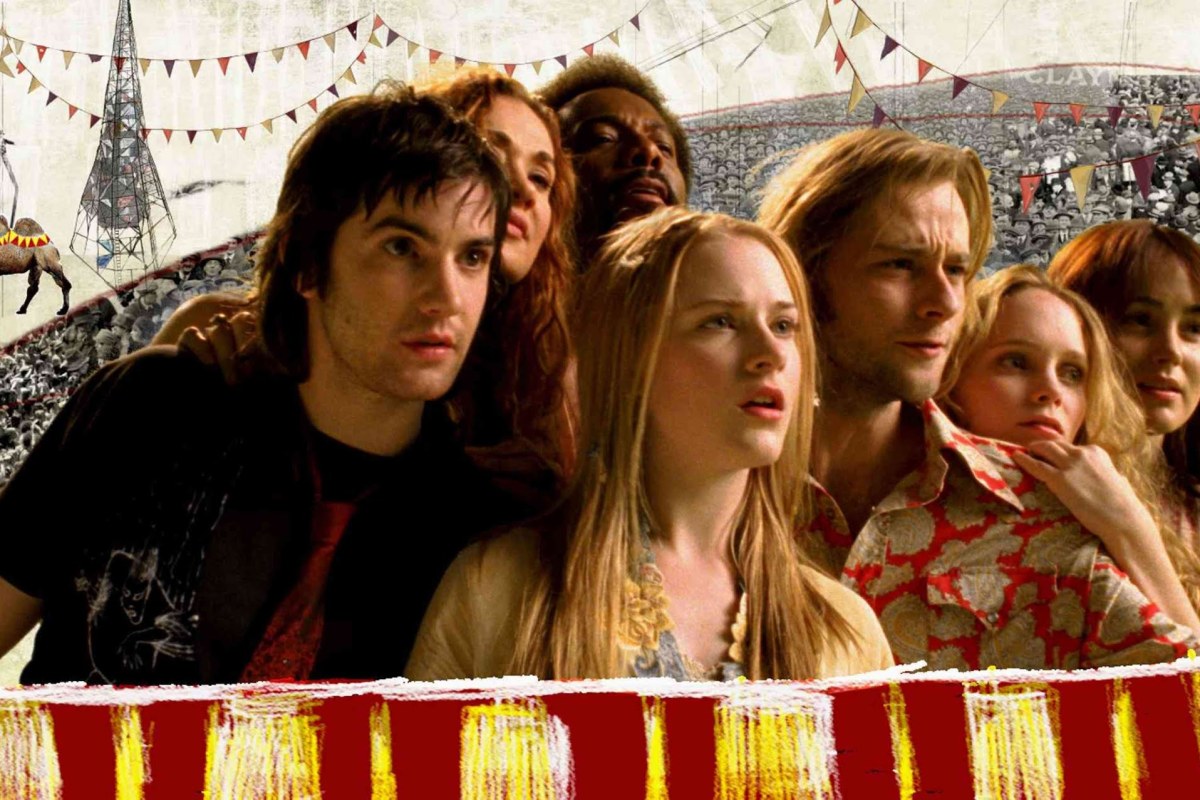
Jude (Jim Sturgess) moves from Liverpool to America where he meets and falls in love with Lucy (Evan Rachel Wood). Set in the 1960s, the socio-political climate of the time makes for a dramatic background to this moving love story.

Director Julie Taymour (Frida, Titus) truly transports her audience. The film’s littered with references to the period, particularly within the music industry, but even if you only pick up the odd one it still makes for mesmerising viewing.

BFF_F-RATEDlogo_ART

100 Word Review – Truly Madly Deeply (1990)

Despite the absence of Whoopi Goldberg, this film is a billion times better than Ghost.

Nina (Juliet Stevenson) and Jamie (Alan Rickman) are in love, completely and utterly. When Jamie dies, Nina expects to be haunted by him, but perhaps not literally.

Written and directed by Oscar winning Anthony Minghella (The English Patient, The Talented Mr Ripley), this is one of those films that will stick with you.  Minghella wrote the film specifically for Stevenson and there is no doubt without her and Rickman’s tremendous performances there would not be a film.

It is full of heartbreak, humour and hope.

BFF_F-RATEDlogo_ART

Boy Meets Girl (2014)

it is so refreshing to watch a film starring a transgender woman who is treated like a human, and not one who is mentally ill or comic relief.

When I first sat down to watch this I was expecting a soppy romance that I could have on in the background while I sorted through my emails; something with a couple of laughs, a misunderstanding, a “but they’re meant for each other” moment and most likely a chase sequence ending in a romantic embrace. In a way I wasn’t wrong, but I wasn’t expecting to be genuinely moved.

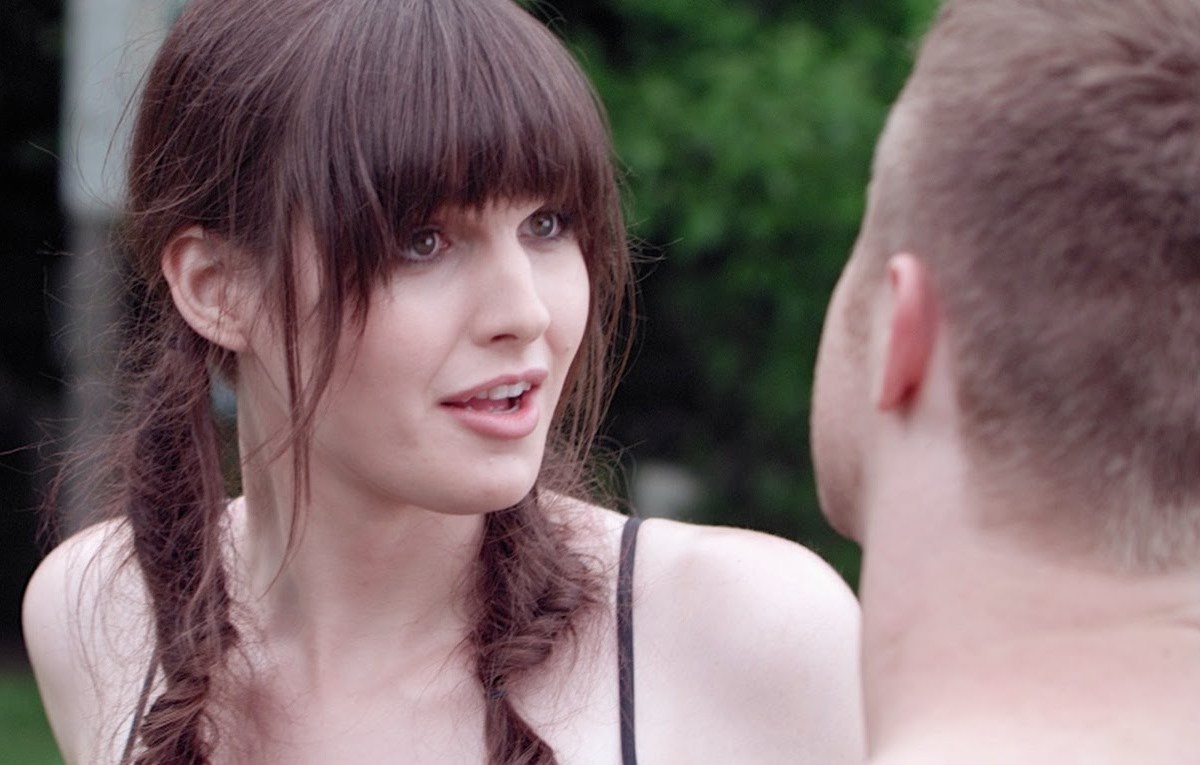
Boy Meets Girl focuses around Ricky (Michelle Handley) who lives with her father and little brother Sam (Joseph Ricci). Best friends with Robbie (Michael Welch), the film opens with her working in a coffee shop, moaning to him about the lack of romantic interest in her life. But, as with all good Rom-Coms, that is all about to change.

The film, while focused on the present, dips in and out of the past with a YouTube video that Ricky made as a youngster, explaining and expanding an already complex and complete character.

Written and directed by Eric Schaeffer, it’s a well put together film with a cast that really holds its own. While it does play in to some of those Romantic Comedy cliches and has the feel of an independent, it embraces itself for what it is and encourages its audience to do the same.

I have asked myself whether if this was a heteronormative storyline whether I would have enjoyed it so much. Honestly I don’t think I would have. Much of its charm lies in the fact that it is tackling issues that are usually found in serious dramas or late night TV documentaries where they are handled with far less care. Far too often the end result is either that of freaks or clowns. This films brings transgender out of the circus and into the real world where it belongs.

Ricky is a strong confident woman, who knows who she is, who she wants to be and what she has to do to get from one to the other. She has a sharp tongue and a determination to match. She is flawed only in that she is human; no more so than the next person. While her gender and sexuality (two very different things) play central roles in the film, neither is something she is blamed for. She is never portrayed as indecisive, attention seeking, mentally ill or as someone to make fun of.

In an ideal world this would not be worthy of note, but I can honestly say this is the first film I have seen that manages this. Even TransAmerica (2005) found humour in Bree (Felicity Huffman). The Adventures of Priscilla, Queen of the Desert (1994) came close with Terence Stamp as Bernadette, but that’s about it. Here’s hoping it will not be the last.

100 Word Review – Hello, Dolly! (1969)

Barbra Streisand is one of the most fabulous people to walk the Earth, and this wonderful film is just one of her many gems.

Dolly (Streisand) is a rich widow who uses her many talents to improve the lives of those around her, namely as a matchmaker.

Based on the much-loved Broadway musical, directed by Gene Kelly (Singin’ In The Rain) and co- starring Walter Matthau and Michael Crawford, it’s little wonder it won three Oscars.

Funny, sweet, sad, romantic and jam-packed with songs that are liable to have you dancing in the aisles (one of which featured on Wall.E).

100 Word Review – Attila Marcel (2013)

This was one of my unexpected gems from Bath Film Festival 2014.

Paul (Guillaume Gouix) is a mute. Living with his two over-bearing aunts, it is not until an accidental meeting with Mme Proust (Anne Le Ny) that takes him on a psychedelic psychological journey through his repressed childhood.

Written and directed by Sylvain Chomet (Belleville Rendezvous, The Illusionist), this is his foray into live-action, bringing all the creative visuals he is known for to a new medium. It is full of the charm, wit and philosophy you would expect, with such beautiful scene composition you cannot help but feel transported.

100 Word Review – Moonrise Kingdom (2012)

Wes Anderson (Grand Budapest Hotel, Fantastic Mr. Fox) explores the weird and wonderful world of childhood in this charming feature film.

Set on a small island off the New England coastline, a pair of 12 year old lovers run away together causing an island-wide search party.

This really is an ensemble piece, with the likes of Bruce Willis, Bill Murray, Edward Norton, Frances McDormond, Tilda Swinton and Jason Schwartzman making up the inhabitants of this strange and beautiful community.

Part comedy, part drama with a touch of romance and tragedy thrown in for good measure, watching Moonrise Kingdom is watching Art.